

Are you trying to shop healthier in 2026? Does your focus lie in long-term wellbeing and reducing your exposure to potentially harmful chemicals? One thing to be aware of is pesticide residue on fresh produce.
Each year, the Pesticide Action Network UK (PAN UK) analyse government food testing data to highlight which fruits and vegetables most often contain multiple pesticide residues. These lists aren’t to scare you, they’re about helping you prioritise where organic produce could make the biggest difference for your health and budget.
What Are Pesticides?
Pesticides are chemicals used in farming to control insects, weeds, moulds and other pests. While they help protect crops and keep food affordable, residues can remain on the foods we eat… even after washing or peeling.
Research shows that when several different pesticides occur together – a situation known as the “cocktail effect” – their combined impact may be more significant than if you were exposed to one alone. Certain groups, such as young children and expectant parents, can be particularly sensitive to chemical exposures.
Here is PAN-UK’s updated Dirty Dozen list, based on the most recent data available from 2024:
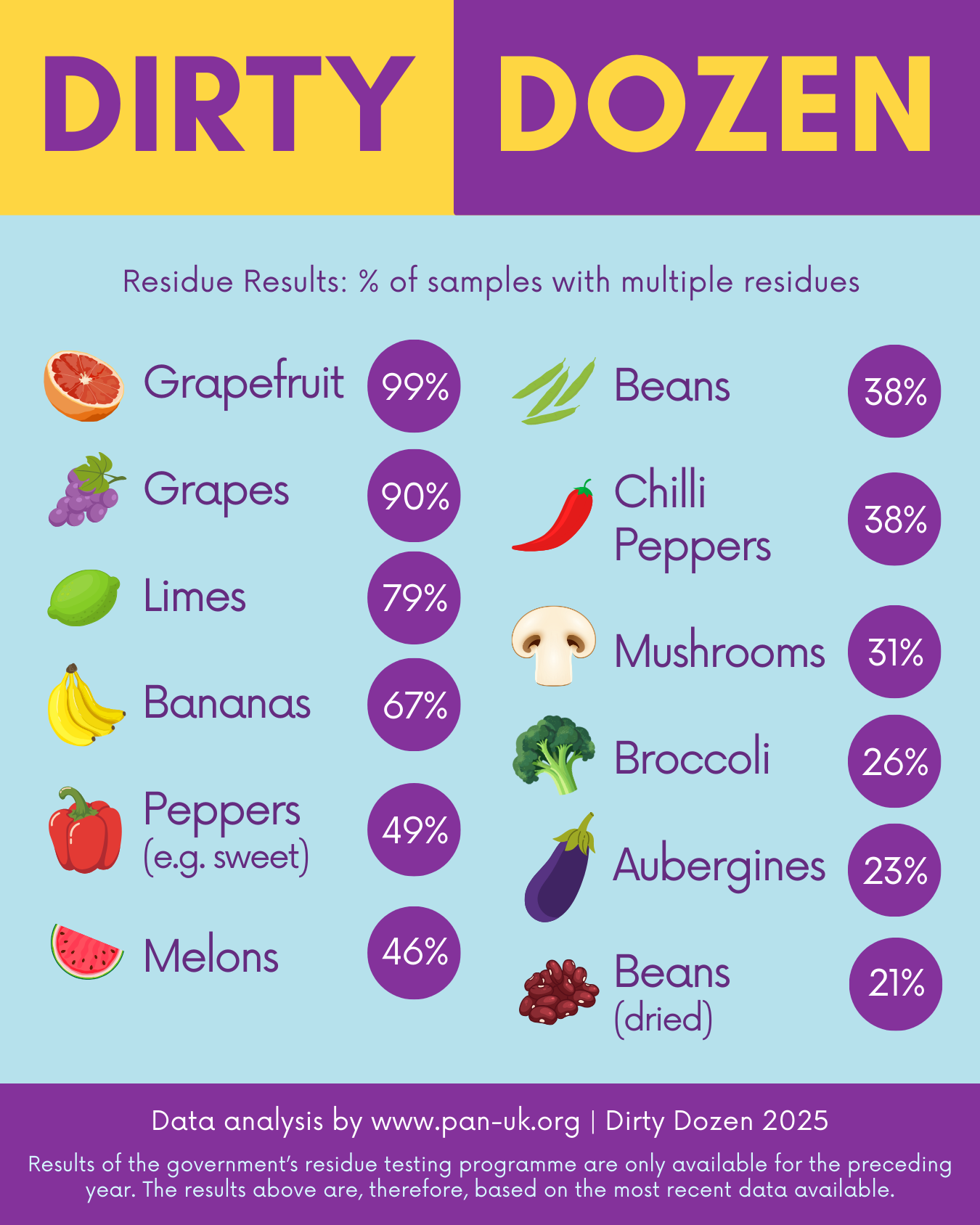
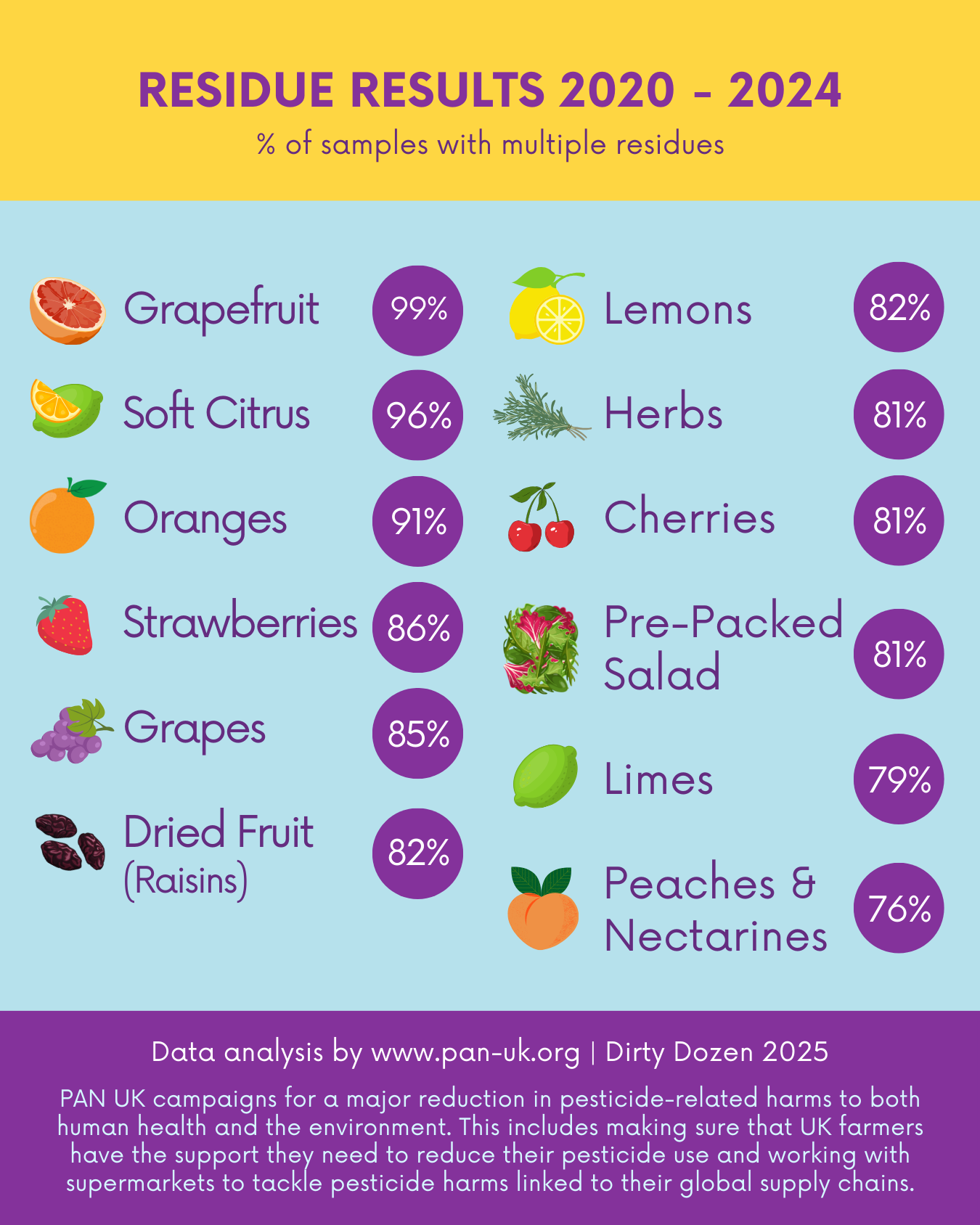
It’s worth noting that PAN UK does not produce a Clean 15 list of goods. They believe the government’s testing program is too limited to provide a full picture of pesticide contamination. PAN UK avoids suggesting that certain fruits and vegetables are entirely free from pesticide residue or pose no risk to human health or the environment. Contamination is still possible, particularly when hazardous pesticides are used but do not leave detectable residues on the final produce.
So what can we do?
Tips to Reduce Pesticide Exposure
1. Prioritise Organic for Dirty Dozen Items
Buying organic versions of the Dirty Dozen can lower your exposure to synthetic pesticides, especially for foods you eat often.
2. Wash Thoroughly
Rinse fruits and vegetables under running water before eating. This doesn’t remove all residue, especially systemic pesticides absorbed into the plant, but it can help reduce surface residue.
3. Mix Up Your Produce
Eating a wide variety of fruits and vegetables boosts nutrient intake and can spread out any chemical exposure.
4. Don’t Skip Veg Just Because of Pesticides
Even produce on the Dirty Dozen list is rich in vitamins, fibre and antioxidants – and a diet high in fruit and vegetables is linked with lower cancer risk, better heart health and overall wellbeing. The benefits do generally outweigh the risks from low-level pesticide residues.
We hope this information has been helpful to inform your weekly shopping habits. For more nutritional guidance and support, please browse our Events page to view and book onto any of our wellbeing workshops to support your journey. We often welcome Naturopath, Emmie, at Hummingbird Naturopath to host regular nutrition sessions at Together Against Cancer.
PAN UK campaigns for a major reduction in pesticide-related harms to both human health and the environment. This includes making sure that UK farmers have the support they need to reduce their pesticide use and working with supermarkets to tackle pesticide harms linked to their global supply chains. Please click here to view the original data analysis of PAN-UK’s Dirty Dozen 2025.