
Your gut is home to a thriving universe of microorganisms, otherwise known as the gut microbiome. This ecosystem houses trillions of beneficial bacteria, fungi, and other microscopic life forms that help you digest food, regulate your immune system and even influence your mood and cognition. Nurturing this internal ecosystem with the right foods and lifestyle choices creates the optimum environment for it – and for you – to thrive.
For people navigating cancer, gut health is especially important. Did you know the gut biome is responsible for about 70% of your immune system? In other words, most of your body’s defence cells live in or around your digestive tract. This means your gut doesn’t just break down food; it’s also your body’s largest immune-training ground, constantly “teaching” immune cells how to recognise friend from foe. When your gut microbes are balanced, they help strengthen your intestinal barrier, reduce inflammation and produce compounds that support immune function. When they’re disrupted – which can happen with chemotherapy, antibiotics, a low-fibre diet, or even harmful/parasitic overgrowth – your immunity may be weakened and your digestion impacted.
This is why incorporating probiotic-rich foods during cancer can be so valuable. Supporting your gut flora may help to restore some of this balance and improve your overall digestive wellness, which is especially valuable during treatment and recovery. While high-fibre, plant-based foods feed the beneficial bacteria you already have (known as prebiotics), probiotic foods introduce new friendly strains directly into your digestive system. Think of it as replenishing your garden with fresh seeds before watering and fertilising.
Why Probiotics Matter
Probiotics are live beneficial microorganisms that, when consumed in adequate amounts, help maintain or restore a healthy gut microbiome.
Research in oncology nutrition has shown that probiotics can:
- Aid digestion and nutrient absorption, which may be compromised during treatment
- Reduce treatment-related diarrhoea and bloating
- Support immune function by strengthening the gut barrier and modulating immune cells
- Lower inflammation in the gut and, by extension, the rest of the body
Although probiotics are not a cure or substitute for medical treatment, many patients find them incredibly supportive on their journey. Adding probiotic-rich foods for cancer is a simple, non-invasive way to begin restoring microbial diversity and resilience.
Try These Probiotic-Rich Recipes…
It might feel daunting, but incorporating probiotic-rich foods into your diet doesn’t have to be complicated. It can also be fun to prepare and delicious to eat! Thanks to the Food Revolution Network, below you’ll find 7 nourishing plant-based recipes to try:
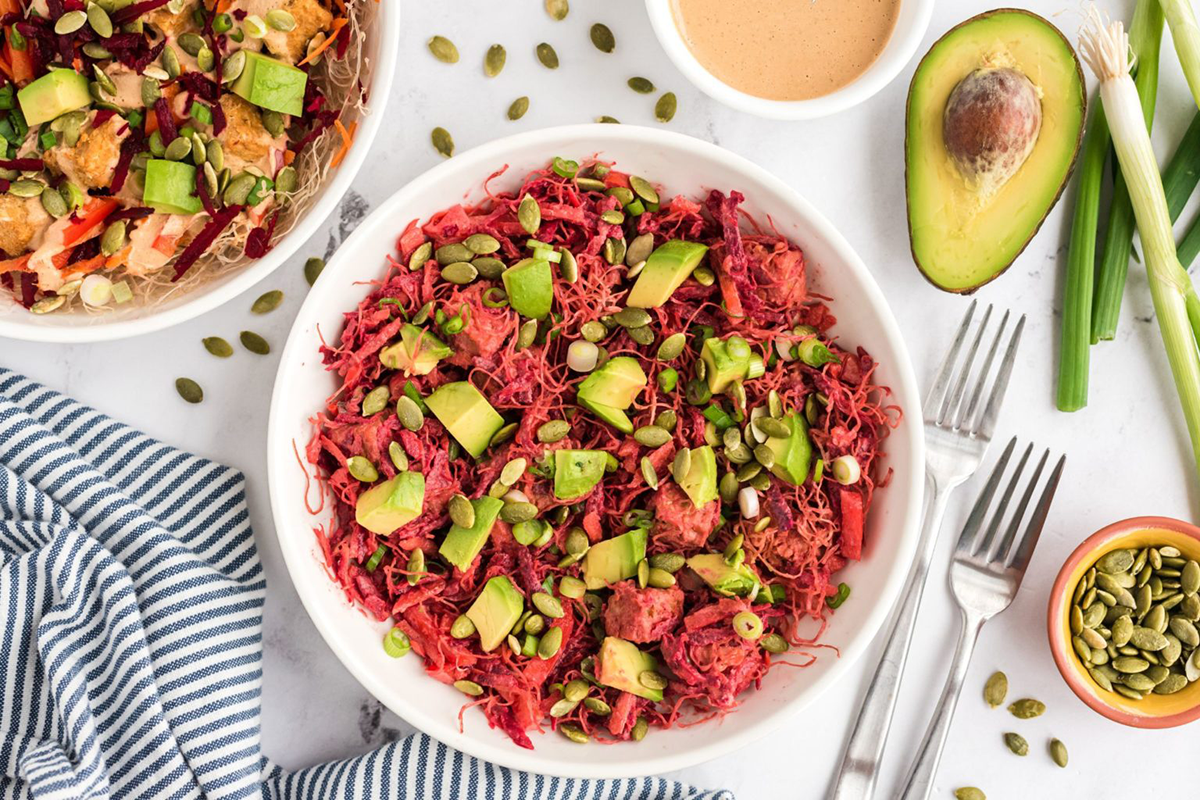
1. Kelp Salad With Baked Tempeh and Kimchi Miso Dressing
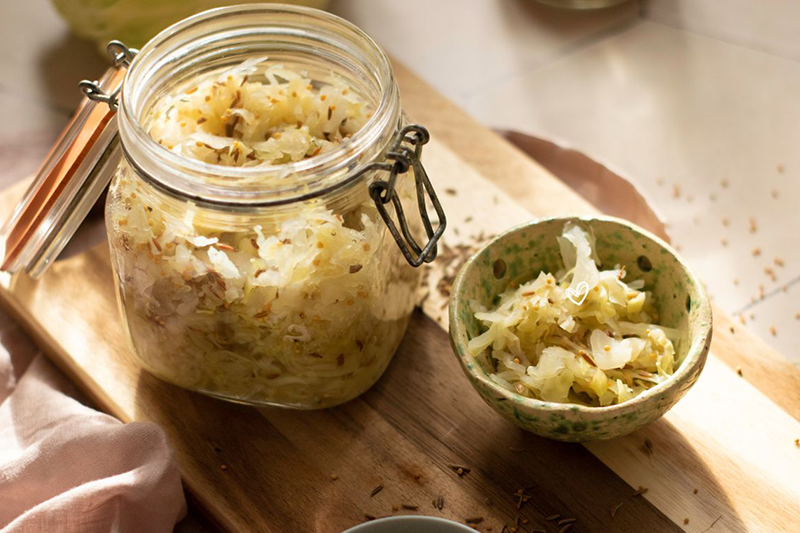
2. Homemade Green Cabbage Sauerkraut
4. Three-Seed Fermented Buckwheat Bread
5. Vegan Labneh
6. Fizzy Blueberry Ginger Water Kefir
7. Homemade Cashew Yogurt and Berry Parfait
The table below offers some recipe modifications if you are experiencing sensitives during treatment:
| Recipe | Benefit | Modification |
|---|---|---|
| Kelp Salad With Baked Tempeh and Kimchi Miso Dressing | Protein (tempeh) + iodine (kelp) + probiotics (kimchi/miso) support gut and immune health. | Use milder kimchi or smaller amount of miso dressing if mouth sores, taste changes or sensitivity to spice occur. |
| Homemade Green Cabbage Sauerkraut | Classic probiotic with lactic acid bacteria; supports digestion and microbial diversity. | Rinse lightly to reduce saltiness or use smaller portions; cook briefly to soften (note live cultures decrease with heat). |
| Homemade Kimchi | Fermented vegetables provide beneficial bacteria. | Make a ‘white kimchi’ (non-spicy) or reduce chili to create a milder ferment. |
| Three-Seed Fermented Buckwheat Bread | Fermentation improves digestibility and nutrients in gluten-free grains. | Serve thin slices; toast lightly to make it easier to chew; skip seeds if hard to digest. |
| Vegan Labneh | Soft, creamy, plant-based fermented spread high in probiotics. | Choose plain unsweetened versions; use mild herbs instead of strong garlic/onion if taste changes or nausea occurs. |
| Fizzy Blueberry Ginger Water Kefir | Hydrating beverage-based probiotic option with antioxidants from blueberries and ginger. | Let ferment longer to reduce sugar content; strain out ginger if too strong for nausea. |
| Homemade Cashew Yogurt and Berry Parfait | Creamy, mild probiotic-rich yogurt with antioxidant berries. | Use softer fruits (peeled pears or cooked berries) if raw fruit is hard to digest; avoid crunchy toppings. |
Be sure to experiment with flavours to get a sense for what your body enjoys most. After all, our physical vessel carries the most wisdom and sometimes foods that are loved by one individual might not agree with another. Happy cooking!
At Together Against Cancer, we often welcome guest speakers to the Wellness Centre to support your health and wellbeing, including nutritional guidance and ways to easily maintain an optimum diet during a healing journey. If you have any queries about probiotic foods or anything mentioned in this post, please reach out to our team or keep an eye on our events page for an updated schedule of workshops over the coming months: https://www.togetheragainstcancer.org.uk/events/